
How to Build a Design System With Claude Code
Your WordPress theme was enforcing design consistency invisibly. When you migrate to a custom Claude Code build, that disappears. Here is how to replace it with four files.
Read articleManual lead collection feels productive until you do the math. Here is why it keeps costing you time, and the system that replaces it.

Monday morning arrives, and you open a directory, find 40 businesses in your niche, and start copying names, emails, and phone numbers into a spreadsheet.
Two hours later you have a list. It feels productive. You have something to work with - real contacts, real businesses, names you can actually reach.
Next Monday you do the same. The week after, the same again.
The cost does not show up anywhere obvious. Each session feels like progress because you built something. But the math does not hold up.
If your time is worth €80 an hour, those two hours cost €160 in extracted value. Every week. That is €640 a month, and over €7,500 a year - spent producing a CSV file.
And that is only the direct cost. There are three more costs that never appear in the spreadsheet:
The work of finding leads - opening directories, reading listings, extracting contact information - is structured and repeatable. Structured and repeatable work is exactly what automation handles well.
This is not a research problem. It is a systems problem.
What manual collection gives you: A list that decays, a ceiling you hit every week, and a process that stops the moment you stop.
What an automated system gives you: A pipeline that runs on a schedule, deduplicates itself, and produces fresh leads whether you are working or not.
The only reason you are doing it by hand is that the system does not exist yet.
A scraper does not get tired on Monday morning. It opens the same directories, reads the same listings, extracts names and emails automatically, and deduplicates against the list it already built. You configure which directories to target once. After that, leads arrive without any manual work.
The first run gives you usable leads. The second run adds more. By week four, you have a pipeline that would have taken two months of Monday mornings to build by hand.
We built this system as a blueprint. The Lead Scraper handles any directory - pagination, cookie walls, and obfuscated emails are handled automatically. A sites.yaml file controls which directories it targets. An n8n workflow runs it on a weekly schedule and drops the output into your pipeline.
What is included
scraper.py - stealth browser scraper with deduplication and multi-site supportsites.yaml - run unlimited target directories from a single config filen8n workflow - manual trigger and weekly cron pipeline, ready to importCLAUDE.md + MEMORY.md - persistent agent context so Claude picks up where you left offQUICK_START.md - 15 minutes from setup to first leadsSetup takes 15 minutes. From that point forward, the scraper runs every week on its own.
One afternoon of setup replaces every future Monday morning of manual collection.May you build Greatness! 🍀
Michael

Extract leads from any directory automatically. Runs on a schedule, deduplicates itself, drops output into your pipeline.

Your WordPress theme was enforcing design consistency invisibly. When you migrate to a custom Claude Code build, that disappears. Here is how to replace it with four files.
Read article
Claude Code is not a developer tool. It is the tool that builds the marketing automations you keep describing in chat. No developer needed.
Read article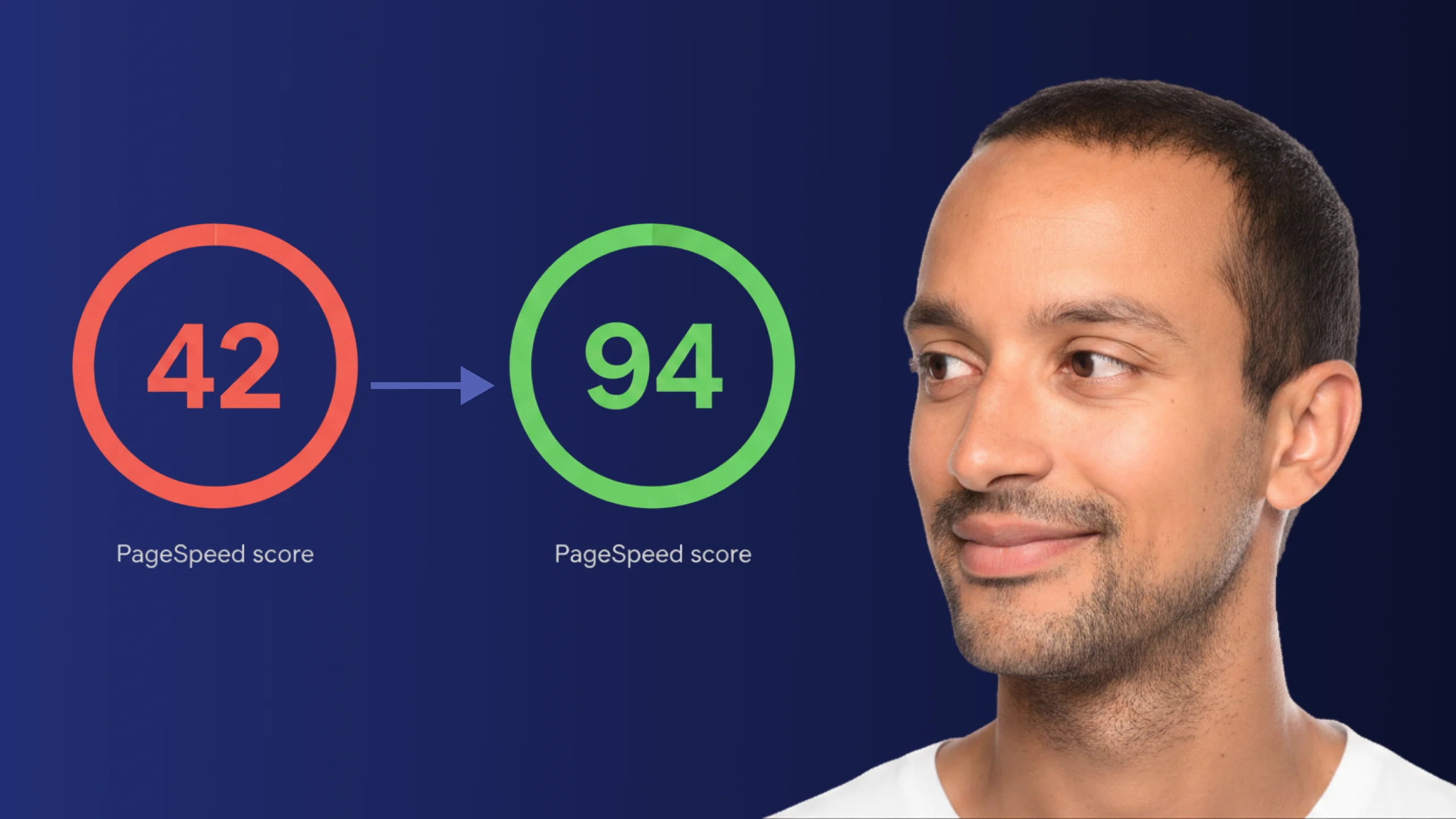
A PageSpeed score of 42 is not just slow - it is losing you real traffic on every visit. Here is exactly how Claude Code diagnosed and fixed the performance issues that moved this site from 42 to 94.
Read article